Proper dental implant aftercare plays an important role in controlling discomfort, protecting the surgical site and supporting long-term implant success. The instructions below explain what to do after implant placement, sinus lift or bone grafting, as well as how to care for fixed implant crowns and removable implant dentures.
Important: Your dentist’s personalised instructions always come first because recovery may vary depending on the number and position of implants, your health and whether additional procedures were performed.
Dental Implant Aftercare: Quick Checklist
- Take all medicines exactly as prescribed.
- Do not rinse vigorously or spit forcefully during the first 24 hours.
- Apply a cold pack to the outside of the face during the first day.
- Choose soft, nutritious foods and avoid chewing directly on the surgical area.
- Keep the mouth clean, but brush gently around the wound.
- Avoid smoking, alcohol and strenuous exercise while healing.
- Contact your dentist if bleeding is heavy, pain becomes severe or swelling worsens unexpectedly.
Why Aftercare Matters After Dental Implant Surgery
A dental implant needs time to integrate with the surrounding bone. During early healing, the blood clot and soft tissue over the surgical site act as natural protection. Vigorous rinsing, smoking, hard foods or repeated pressure can disturb this area and increase the risk of delayed healing, infection or implant complications.
Good aftercare is not only about the first few days. Daily plaque control, protecting the implant from excessive bite force and attending regular check-ups help preserve the gum, bone and prosthesis for many years.
The First 24 Hours After Implant Placement
Protect the surgical site
- Do not rinse with salt water, mouthwash or other solutions unless your dentist specifically advises it.
- Do not spit forcefully or create suction in the mouth.
- Do not touch the wound with your tongue, fingers or any object.
- Do not remove the pale or white layer that may appear over the wound. This can be part of normal healing tissue.
Control mild bleeding
Light oozing or blood-stained saliva can occur after surgery. Bite gently on the gauze provided by the clinic for the period instructed. If bleeding remains heavy, does not slow with firm pressure or fills the mouth rapidly, contact the dental clinic immediately.

Pain and Swelling: What Is Normal?
Mild, dull pain for one to two days and limited swelling of the lip or cheek are common. Symptoms should generally become easier to manage rather than progressively worse.
- Apply a cold pack outside the cheek near the implant area for about 15 minutes, then remove it for 5 minutes before repeating.
- Use cold packs during the first day and follow your dentist’s advice for the next two to three days.
- Do not place ice directly on the skin.
- Do not use a warm compress immediately after implant placement unless instructed.
- Take pain relief only as prescribed or approved by your dentist.
Swelling that increases after several days, severe throbbing pain, fever or discharge should be assessed promptly.
What to Eat After Dental Implant Surgery
Nutrition supports healing, so do not skip meals unnecessarily. Start with soft foods that are easy to chew and gradually return to your usual diet as comfort improves.
Suitable choices
- Soft rice, porridge, noodles or pasta
- Eggs, tofu, soft fish without bones and tender protein
- Mashed vegetables, soup allowed to cool, yoghurt and smoothies eaten with a spoon
- Plenty of water taken in small, comfortable sips
Foods and habits to avoid
- Very hard, crunchy, sticky or chewy foods
- Sharp foods or fish bones near the implant site
- Very hot foods and drinks while the area is numb
- Chewing directly over the surgical area
- Using a straw, especially after a sinus lift or bone graft, because suction may disturb healing
How to Clean Your Mouth After Implant Surgery
Keeping plaque and food debris away from the implant is essential, but cleaning must be gentle during early recovery.
- Brush the other teeth as usual with a soft toothbrush, taking care around the surgical site.
- After the initial healing period advised by your dentist, brush at least twice daily.
- Floss between natural teeth and use implant-specific cleaning aids only when the dentist says the area is ready.
- If chlorhexidine mouthwash is prescribed, use the exact strength, amount and duration directed. Do not use it longer than recommended.
- After eating, check gently that food is not collecting around the implant area.
Do not scrub stitches, force a water flosser into a fresh wound or rinse vigorously during the first 24 hours.
Medicines, Activity, Smoking and Alcohol
- Take antibiotics, pain medicine or other medication exactly as prescribed.
- Do not stop a prescribed course early unless your dentist or doctor tells you to.
- Rest and avoid strenuous exercise, running or heavy lifting for at least the first 48 hours, or longer if advised.
- Do not smoke or vape during healing. Many clinicians recommend avoiding smoking for at least two to four weeks because nicotine and heat can impair blood flow and tissue repair.
- Avoid alcohol while taking medicines and during the early healing period.
Aftercare for Bone Grafting and Sinus Lift
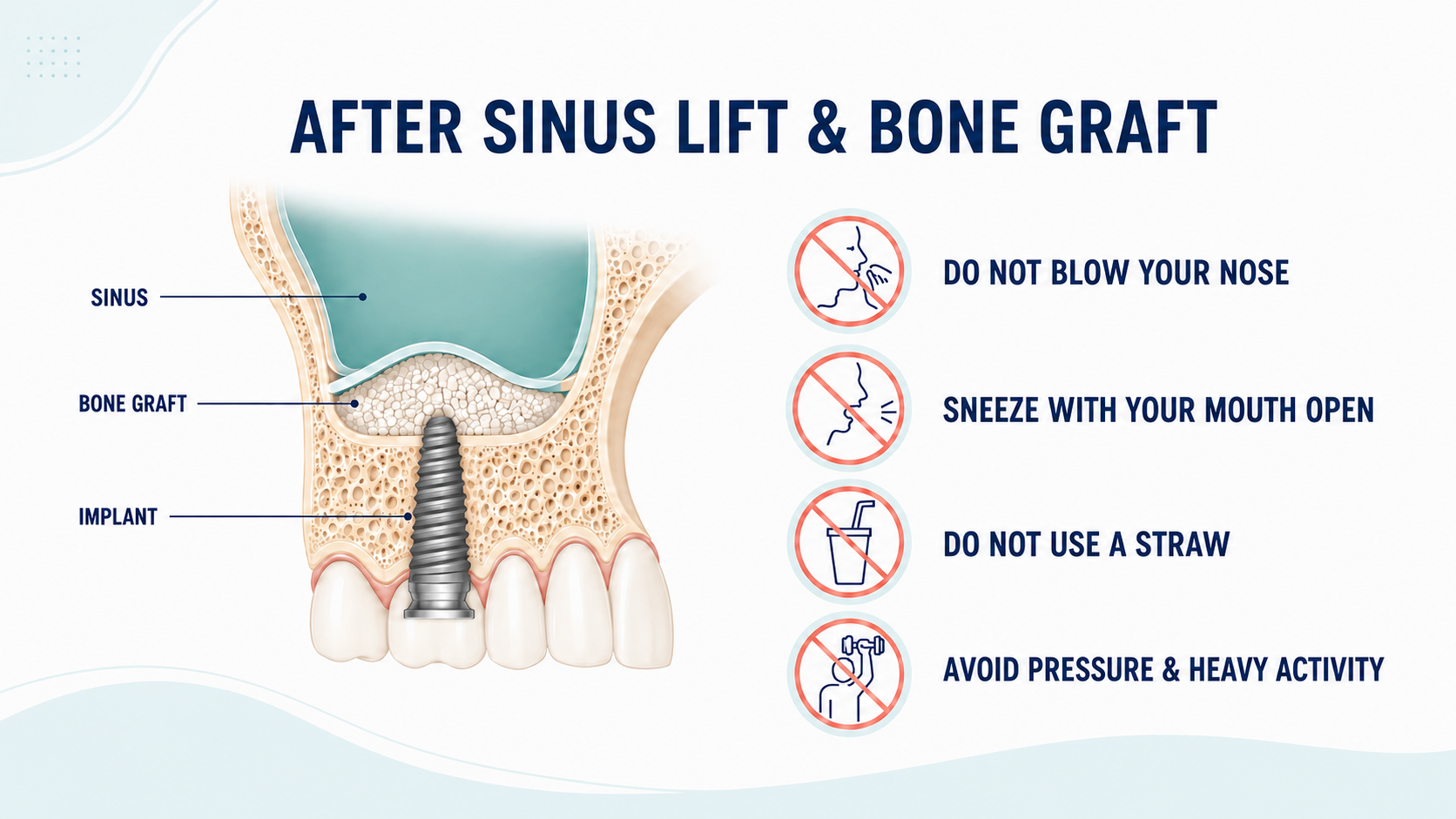
A sinus lift or bone graft may require extra precautions because changes in pressure can affect the grafted area and sinus membrane.
Cold and warm compresses
Use a cold pack outside the surgical area on the first day, following the 15-minutes-on and 5-minutes-off schedule recommended by the clinic. Mild swelling over the following days can be normal. A warm compress may be introduced later only when your surgeon recommends it; keep it comfortably warm to avoid burns.
Sinus precautions
- Do not blow your nose forcefully.
- If you need to sneeze, keep your mouth open and do not pinch your nose.
- Do not use a straw.
- Avoid smoking and alcohol.
- Avoid strenuous exercise, heavy lifting and activities that create pressure changes.
- Delay air travel until your surgeon confirms that it is safe.
Your surgeon may recommend these precautions for approximately 15 to 20 days, but the exact period must be personalised. Any prescribed rinse, such as chlorhexidine-based products, should be used gently and according to the product and clinic instructions. Do not begin saline rinses until your surgeon advises it.
Stitches and existing dentures
Non-dissolving stitches are often reviewed or removed around 7 to 10 days after surgery, although timing varies. An old denture should be checked by the surgeon before it is worn because pressure from an unadjusted denture can irritate the graft or implant site.
Long-Term Care for Implant Crowns and Dentures

Fixed implant crowns and bridges
- Brush twice daily with a soft toothbrush and clean carefully along the gumline.
- Use floss, interdental brushes or a water flosser as demonstrated by the dental team.
- Avoid repeatedly biting very hard foods or using the teeth to open objects.
- If you grind or clench your teeth, ask whether a protective night guard is needed.
- Return promptly if the crown feels loose, the bite feels high or food repeatedly becomes trapped.
Removable implant dentures
A new removable implant denture may initially feel bulky or cause sore areas. Do not try to bend or adjust it yourself. Several short adjustment visits may be needed until it fits comfortably.
- Insert the denture by hand in the correct position.
- Never bite it into place if it is not properly seated.
- Remove and clean it daily using the method recommended by your dentist.
- Handle it over a folded towel or basin of water so it is less likely to break if dropped.
- Never soak or rinse the denture in hot water because heat can warp it.
- Clean around the implant attachments carefully and attend maintenance visits.
When to Contact Your Dentist Immediately
- Heavy bleeding that does not slow with pressure
- Severe pain or pain that suddenly worsens after initially improving
- Swelling that continues to increase, difficulty breathing or difficulty swallowing
- Fever, pus, an unpleasant taste or persistent bad smell
- Numbness that is new, worsening or lasts longer than expected
- An implant, healing cap, crown or denture attachment that feels loose
- A bite that feels blocked or unusually high
- After a sinus lift: air or fluid passing unexpectedly between the mouth and nose, or persistent nose bleeding
Do not delay an adjustment if the bite feels wrong or a prosthesis is rubbing. Continuing to chew on a poorly fitting crown or denture can damage the restoration and overload the implant.
Dental Implant Check-Ups and Maintenance
Healing reviews allow the dentist to assess the gum, stitches, bite and stability of the implant. After treatment is complete, many patients benefit from professional implant maintenance approximately every six months. Some need shorter intervals depending on gum health, smoking history, medical conditions, plaque control or previous periodontal disease.
Frequently Asked Questions About Dental Implant Aftercare
How long does pain last after dental implant surgery?
Mild discomfort commonly lasts one to two days and should gradually improve. Contact the clinic if pain is severe, difficult to control or worsens after several days.
When can I brush after an implant?
You can usually brush the other teeth gently from the day of surgery, but avoid disturbing the fresh wound. Follow the dentist’s instructions about when to begin cleaning directly around the implant and stitches.
Can I rinse with salt water?
Do not rinse vigorously during the first 24 hours. The timing of saline rinses varies by procedure, so start only when your dentist or surgeon advises it.
Can I use a water flosser around an implant?
A water flosser can be helpful for long-term cleaning around implant restorations when used correctly. Do not direct a high-pressure jet at a fresh surgical wound; wait for clearance and ask the dental team to demonstrate the correct setting and angle.
How long should I avoid smoking?
Avoid smoking throughout healing. A common minimum is two to four weeks, but stopping for longer provides greater protection for gum and bone health. Your surgeon can advise based on your procedure.
Need Help With Your Implant Recovery?
If you have questions about pain, swelling, cleaning, food choices or your implant restoration, contact Cora Dental Clinic for personalised advice and a timely review.
This article provides general educational information and does not replace examination, diagnosis or individual instructions from your dentist or surgeon.