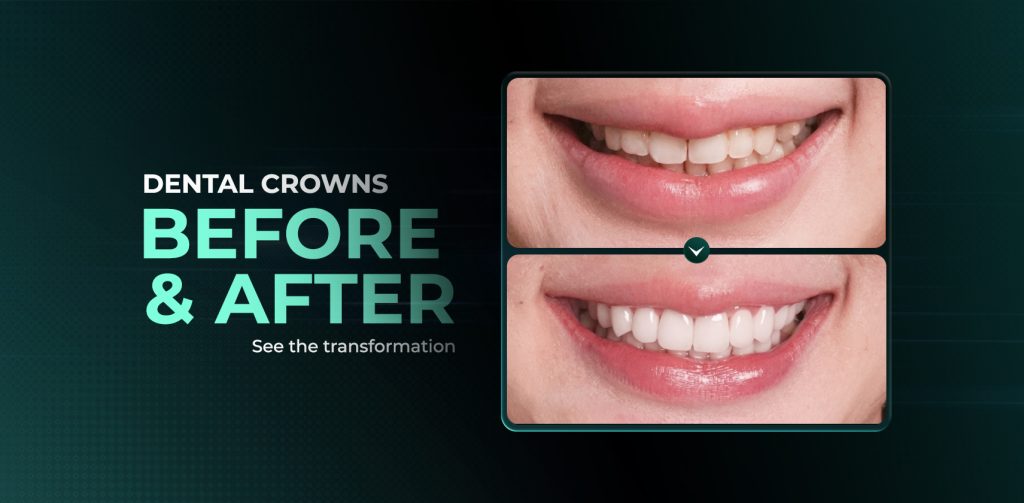
Before-and-after photos can make the changes from dental crown treatment easier to understand. They may show improvements in visible color, contour, symmetry, or the appearance of worn and damaged teeth. However, photographs alone cannot show the health of the tooth underneath, the condition of the gums, the bite, or whether the same treatment would be appropriate for another person.
This guide explains what dental crowns can change, what real case photos can and cannot tell you, how treatment is planned, and what to consider before deciding. Every case requires an in-person dental assessment, and individual results vary.
What is a dental crown?
A dental crown is a custom-made restoration that covers the visible part of a tooth. It can help restore the shape, appearance, strength, and function of a tooth that is worn, cracked, weakened, heavily filled, or affected by decay. Crowns can also be used on some root canal-treated teeth or as the visible restoration attached to a dental implant.
Patient guidance from Cleveland Clinic and Leeds Teaching Hospitals NHS Trust explains that crowns are used to rebuild or protect teeth while improving appearance and function. Because a crown fits over a prepared tooth, some natural tooth structure is removed. That is why the decision should be based on clinical need, not on a photograph alone.

How can Dental Crowns improve the appearance and function of your teeth?
1. Tooth color and overall uniformity
Crowns can mask discoloration that may not respond predictably to whitening, especially when a tooth is also structurally compromised. Shade selection should be planned in relation to the surrounding teeth, skin tone, lighting, and the patient’s preference. The goal is not simply to choose the brightest shade, but to create a result that looks balanced in the individual smile.
2. Shape, contour, and visible wear
A crown can rebuild a tooth that is chipped, worn, misshapen, or reduced by a large filling. The final contour is designed to work with the neighboring teeth and the patient’s bite. Good planning considers both appearance and function.
3. The appearance of gaps or uneven front teeth
In selected cases, crowns may change the visible proportions of teeth or reduce the appearance of small spaces. They are not automatically the best option for healthy teeth that are simply misaligned. Orthodontic treatment, bonding, whitening, or another more conservative approach may be more appropriate. A dentist should compare the benefits, limitations, and amount of tooth preparation required before recommending crowns.
4. Protection and function
For a weakened or damaged tooth, the most important change may be functional rather than cosmetic. A well-planned crown can help restore the tooth’s form and provide coverage during biting and chewing. The bite must be checked carefully because even a visually attractive crown may require adjustment if it feels high or uneven.
Dental Crowns Before and After: Real Transformations at Cora Dental
Case 1: Changes in front-tooth proportions and color
This comparison shows a visible change in the proportions and overall color of the front teeth. When reviewing a result like this, look beyond whiteness: the relationship between the teeth, lips, gum line, and facial expression matters as well.

Case 2: A more even visible smile line
This case shows how treatment planning may change the visible alignment, contour, and shade of the teeth. Whether crowns are appropriate depends on the condition of each tooth and the alternatives available.

Case 3: Discoloration and irregular tooth contours
Crowns may be considered when discoloration is combined with structural concerns, worn restorations, or irregular tooth contours. The exact material and design should be confirmed in the clinical record before this case is described in more specific terms.

Case 4: Extensive visible damage and discoloration
More complex cases may involve several dental concerns at the same time. These situations require careful assessment of the teeth, gums, bite, and long-term maintenance needs. A before-and-after photograph cannot show all of those clinical factors.

What to keep in mind when viewing before-and-after photos
Before-and-after photos are helpful for seeing visible changes in tooth color, shape, and overall smile balance. However, every patient begins with a different dental condition.
Photos alone cannot show important factors such as the health of the teeth and gums, bite alignment, crown material, treatment complexity, or long-term performance. A personal dental consultation is the best way to understand which treatment may be suitable for you and what results you can realistically expect.
Who may be suitable for dental crowns?
A dentist may recommend a crown when a tooth needs substantial restoration or coverage. Common reasons include a cracked or weakened tooth, extensive decay, a large existing filling, significant wear, a root canal-treated tooth, or a tooth with both structural and appearance concerns.
Crowns may not be the first choice when teeth are healthy and the main concern is mild spacing, color, or alignment. Active decay, gum disease, an unstable bite, or uncontrolled teeth grinding may also need to be managed before final treatment. Suitability depends on the condition of the tooth and the patient’s oral health, not only on the desired appearance.
The dental crown process at Cora Dental
The exact sequence varies by case, but a crown treatment plan commonly includes the following stages:
- Consultation and examination. A PRC-licensed dentist assesses the tooth, gums, bite, and treatment goals. Diagnostic images may be recommended when clinically necessary.

- Digital records and planning. Cora Dental can use digital intraoral scanning to capture the shape of the teeth and support restoration planning without relying only on conventional impression trays.

- Tooth preparation. The tooth is carefully shaped according to the treatment plan so the restoration can fit securely. Local anesthesia may be used when appropriate.
- Temporary protection, when needed. A temporary crown may be placed while the final restoration is being prepared.
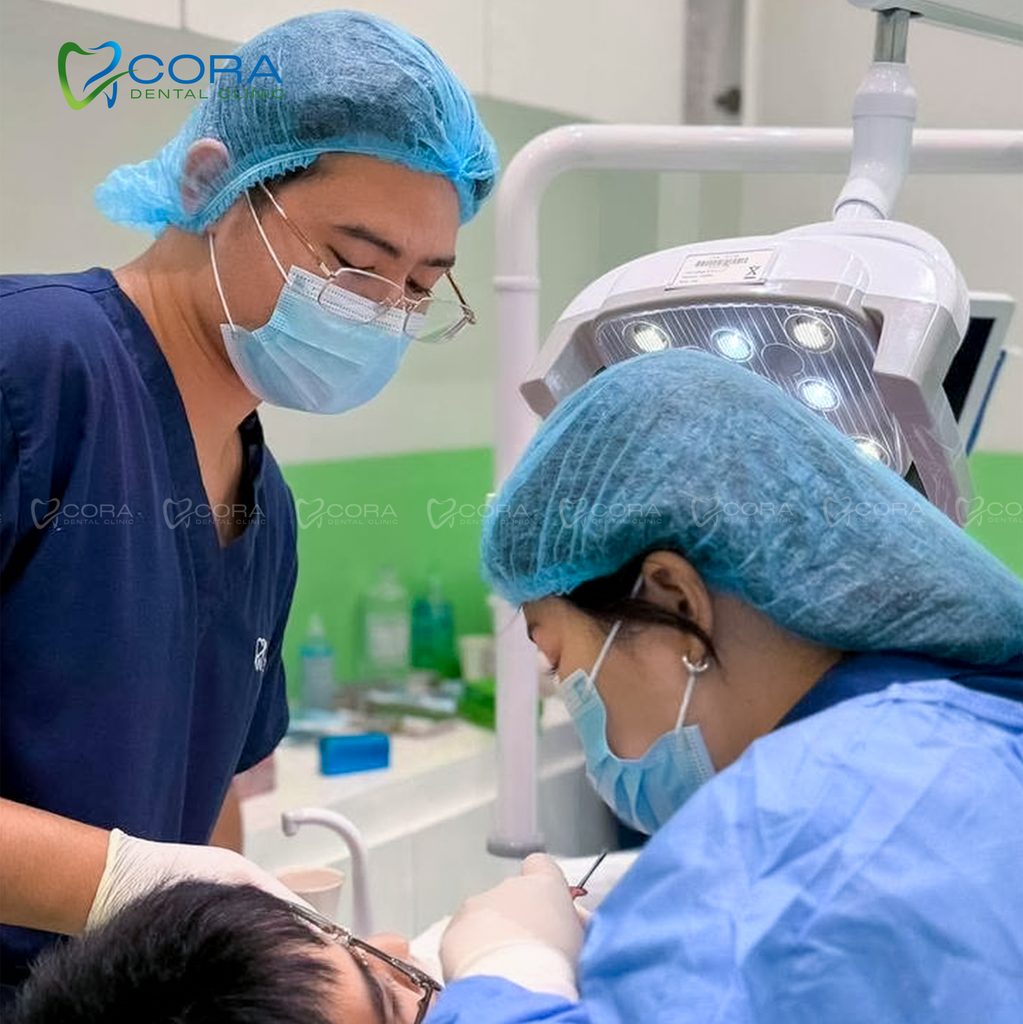
- Try-in, fit, and bite check. The dentist evaluates the margins, contact with neighboring teeth, shade, contour, and bite before final placement.
- Final placement and aftercare. The crown is bonded or cemented, the bite is checked again, and the patient receives instructions for cleaning and follow-up.
Why choose Cora Dental for dental crown treatment?
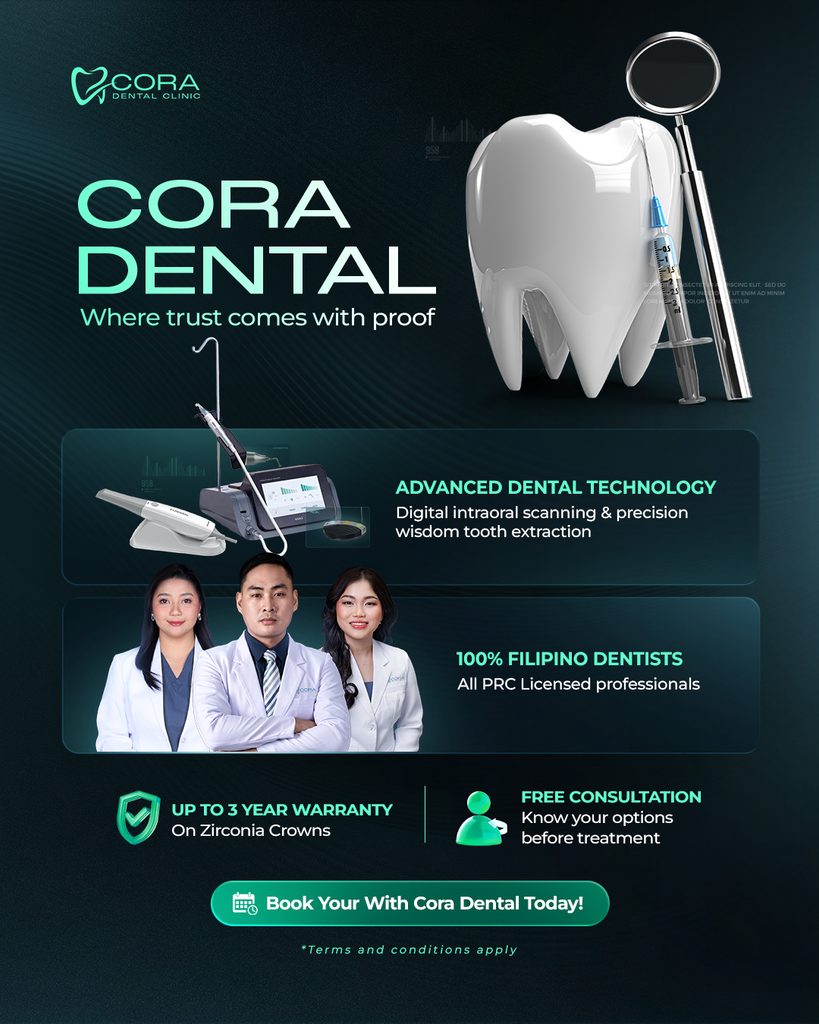
Cora Dental Clinic in Quezon City combines careful clinical assessment with digital treatment planning and restoration design tailored to each patient. Patients can discuss their needs and treatment goals directly with Filipino dentists who are PRC-licensed professionals.
- Digital intraoral scanning for detailed dental records and more precise treatment planning;
- individualized recommendations based on the condition of the teeth, gums, and bite;
- shade and contour planning tailored to each patient’s smile;
- trial fitting, appearance assessment, and bite checks before treatment is completed; and
- up to a three-year warranty on eligible zirconia crown cases, subject to Cora Dental’s current terms and conditions.
How long do dental crowns last?
Crown longevity varies. Material, remaining tooth structure, bite forces, oral hygiene, diet, teeth grinding, and regular dental care all affect the outcome. Cleveland Clinic notes that many crowns last approximately five to 15 years with proper care, but this is a general range rather than a guarantee for an individual restoration.
A crown may need earlier review if it becomes loose, develops a chip, traps food, feels uneven during biting, or is associated with persistent or worsening discomfort.
How to care for dental crowns
- Brush twice a day with fluoride toothpaste and a soft-bristled toothbrush.
- Clean between the teeth daily using floss or an interdental cleaner recommended by your dentist.
- Avoid using crowned teeth to bite ice, pens, packaging, or other hard objects.
- Attend regular dental examinations and professional cleanings.
- Tell your dentist if you grind or clench your teeth; a protective appliance may be recommended.
- Contact the clinic if the crown feels loose, the bite feels high, or pain becomes severe or worsens.
Frequently asked questions
Do dental crowns look natural?
Modern ceramic crowns can be designed to resemble neighboring teeth in shade, shape, translucency, and surface texture. Natural-looking does not mean identical in every case. The result depends on the starting condition, material, design, laboratory work, and clinical fit.
Can crowns fix crooked teeth?
Crowns can change the visible shape of selected teeth, but they do not move tooth roots. For healthy misaligned teeth, orthodontic treatment may preserve more natural tooth structure. A dentist should compare the available options before recommending treatment.
Does getting a dental crown hurt?
Local anesthesia is commonly used during tooth preparation. Mild temporary sensitivity or gum tenderness can occur afterward. Severe or worsening pain, a loose crown, or a bite that feels uneven should be checked by a dentist.
How many visits are needed?
The number of visits depends on the tooth, the treatment plan, the clinic workflow, and whether the crown is produced on-site or by a dental laboratory. Some cases require a temporary crown and a later fitting appointment.
Can every before-and-after result be repeated?
No. Before-and-after photographs show what happened in one individual case. The same design, shade, number of crowns, or outcome may not be appropriate or achievable for another patient.
Book a dental crown consultation in Quezon City
If you are considering dental crowns, bring your questions and reference photos to a consultation. The dentist can assess your oral health, explain whether crowns are suitable, compare reasonable alternatives, and create a treatment plan based on your teeth and bite.
Book your free consultation with Cora Dental today.