Losing one tooth may seem like a small problem, especially when the gap is hidden at the back of your mouth. But a missing tooth can affect much more than the appearance of your smile.
Over time, nearby teeth may shift, chewing can become less balanced, food can collect more easily around the gap, and the jawbone in the missing area may gradually lose volume. At Cora Dental Clinic in Quezon City, missing-tooth treatment is planned around the condition of your teeth, gums, bite, and supporting bone before choosing the most suitable restorative option.

What Can Happen If a Missing Tooth Is Left Untreated?
1. Chewing Can Become More Difficult
Each tooth contributes to how biting forces are distributed. When one tooth is missing, you may begin chewing more on the opposite side or avoiding certain foods. This can make chewing feel less comfortable and may place additional pressure on the remaining teeth over time.
2. Nearby Teeth May Begin to Shift
Teeth naturally help keep one another in position. When a gap is left open, neighboring teeth may gradually tilt or move toward the empty space. The opposing tooth may also move further into the gap. These changes can affect bite alignment and may make future restoration more complex.
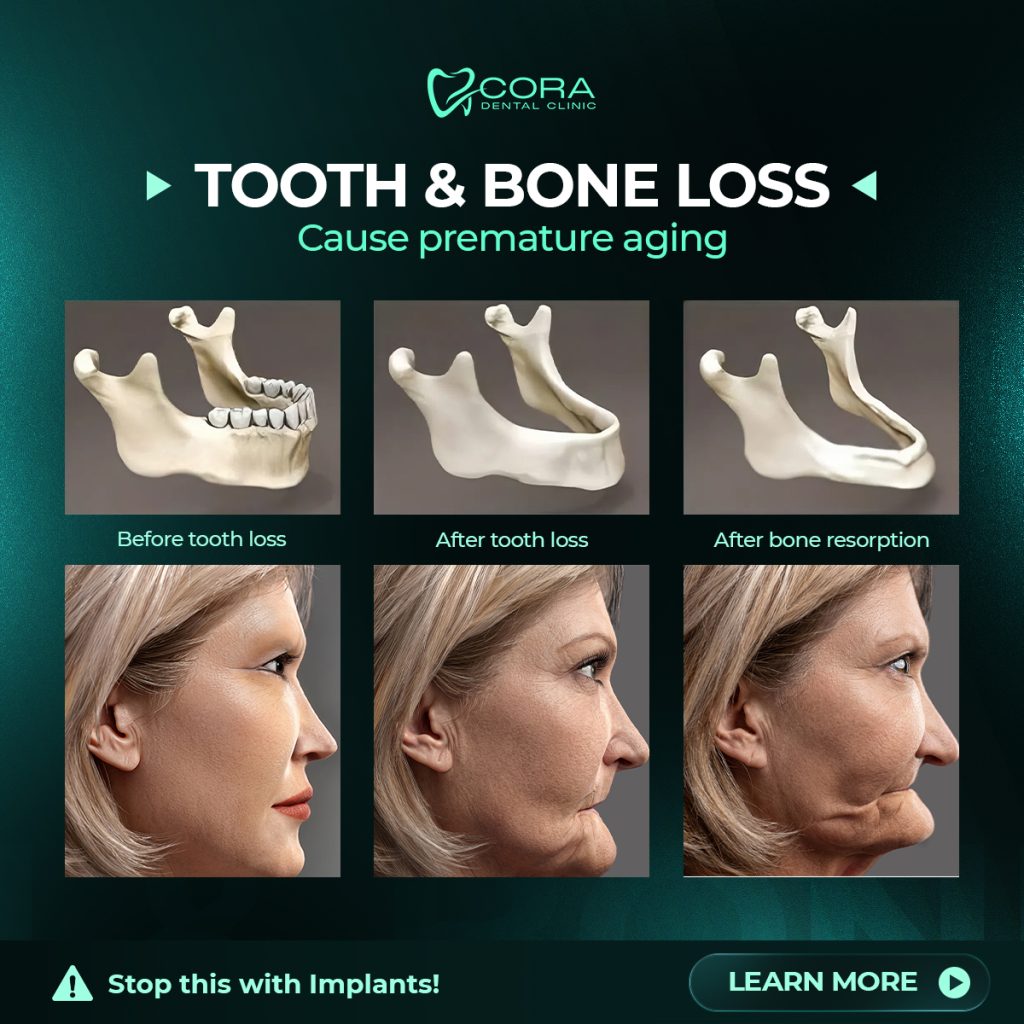
3. The Jawbone Can Change After Tooth Loss
The root of a natural tooth transfers chewing forces to the surrounding bone. After a tooth is lost, that stimulation disappears in the area where the root used to be. As a result, the jawbone may gradually decrease in volume over time. The amount and speed of change vary from person to person.
4. Food and Plaque May Collect Around the Gap
An open space can create areas where food becomes trapped more easily. If the gap and neighboring teeth are difficult to clean, plaque can accumulate and contribute to cavities or gum problems around the remaining teeth.
5. Speech May Be Affected
Front teeth help guide airflow when producing certain sounds. A missing front tooth can therefore affect pronunciation for some patients, particularly during the period before the mouth adapts or the tooth is restored.
6. Your Smile and Facial Support May Change
A visible gap can change the appearance of the smile, while multiple missing teeth can reduce support for the lips and cheeks. Restoring missing teeth is therefore not only an aesthetic decision. It can also help rebuild function and support a more balanced bite.
How Does Cora Dental Restore a Missing Tooth?

There is no single replacement option that is right for every patient. At Cora Dental, the first step is an oral assessment to understand the missing-tooth site, the condition of the neighboring teeth, gum health, bite, and bone support.
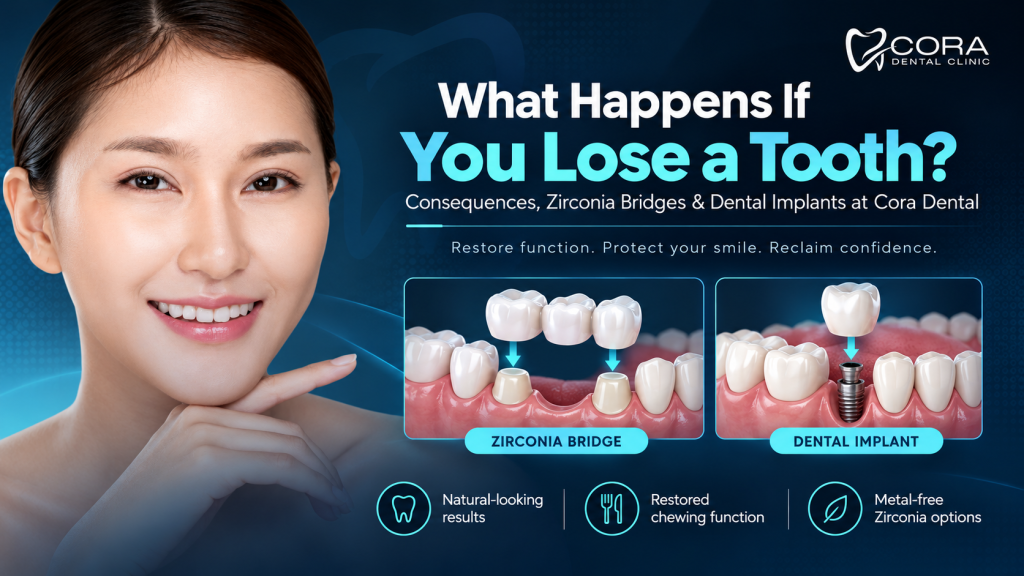
Depending on the case, the dentist may recommend a Zirconia dental bridge, a dental implant restored with a crown, or another restorative plan. The goal is to rebuild function while creating a result that fits naturally with the surrounding smile.
Digital 3D Scanning for More Precise Restorative Planning
For appropriate restorative cases, Cora Dental can use a handheld 3D intraoral scanner to capture the visible surfaces of the teeth and bite digitally. The scanner creates a detailed 3D model that can support restorative design, bite evaluation, and communication with the dental laboratory.
Digital scanning can also be more comfortable for patients who dislike conventional impression trays. For implant planning, CBCT imaging is a separate diagnostic tool that may be used when the dentist needs to evaluate bone volume and surrounding anatomical structures below the gumline.
Option 1: Zirconia Dental Bridge at Cora Dental
A dental bridge is a fixed restoration used to replace a missing tooth by using the teeth beside the gap as support. The replacement tooth is connected to crowns or retainers that hold the bridge securely in position.

Why Zirconia?
Cora Dental uses all-Zirconia, metal-free restorations for suitable crown and bridge cases. Unlike restorations with a metal framework, Zirconia does not have a metal core that may create a dark or grey appearance near the gumline. Its tooth-colored structure also allows the restoration to be designed for a more natural-looking shade and contour.
Zirconia is selected for its combination of strength and aesthetics. Final results still depend on proper case selection, preparation, fit, bite, oral hygiene, and ongoing maintenance.
How a Zirconia Bridge Is Planned
The dentist first checks whether the teeth beside the gap are healthy enough to support a bridge. The supporting teeth are prepared when appropriate, and a digital intraoral scan can be used to record the preparation, margins, bite, and available space. The bridge is then designed and fabricated before the final fit and bite are carefully checked.
Eligible Zirconia bridge cases at Cora Dental may include a 1-year warranty, subject to the clinic’s warranty terms and maintenance requirements.
Option 2: Dental Implant + Zirconia Crown
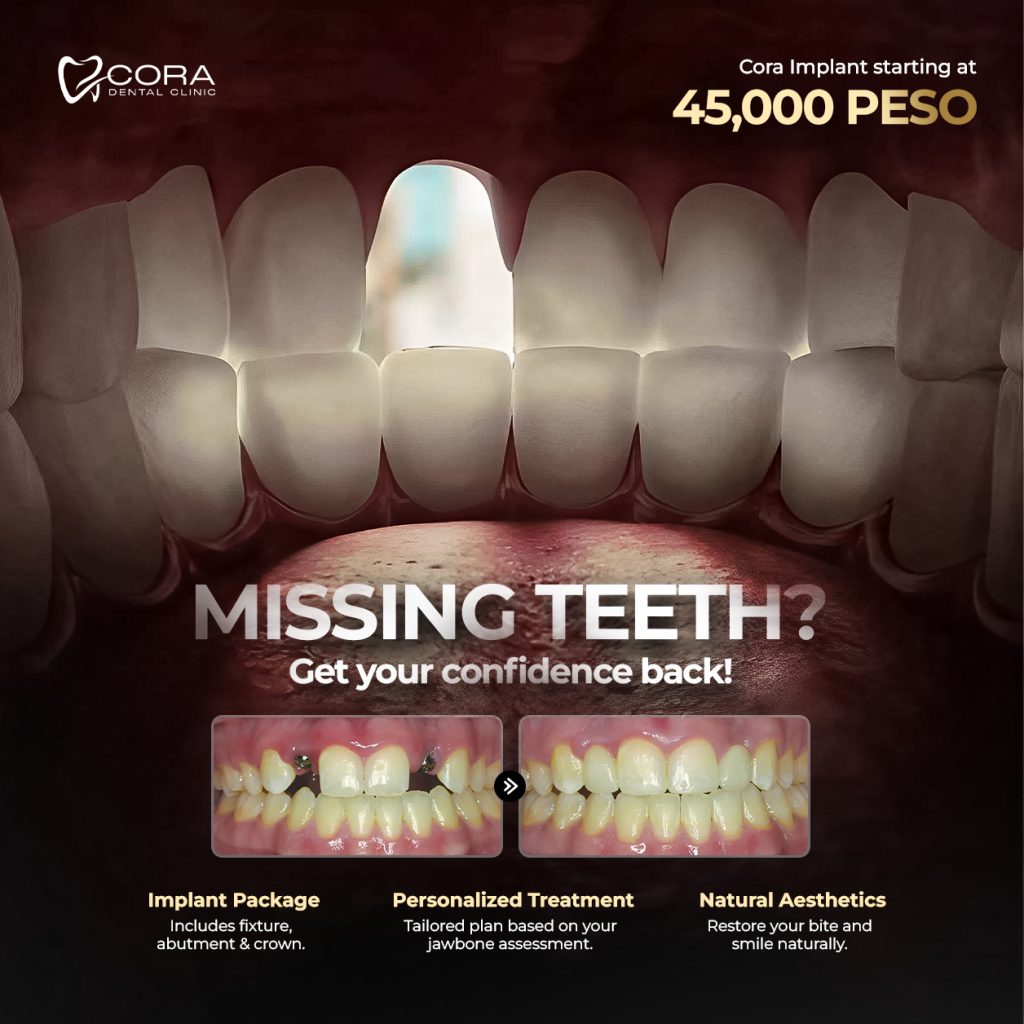
A dental implant replaces the missing tooth in a different way. Instead of using the neighboring teeth for support, a titanium implant fixture is placed in the jawbone and acts as an artificial tooth root. After healing, an abutment and customized crown are attached to restore the visible tooth.
Because an implant is independently supported, it can replace a missing tooth without preparing the adjacent teeth in the same way a conventional bridge usually requires.
Implant Planning at Cora Dental
Implant treatment begins with a detailed assessment of the gums, bite, neighboring teeth, and available bone. CBCT imaging may be recommended to evaluate the proposed implant site and surrounding structures, and to determine whether additional procedures such as bone grafting or sinus management may be needed.
After implant placement, the fixture needs time to integrate with the surrounding bone before the final restoration is completed. Healing time varies by patient and treatment site, but the process commonly takes several months.
Why Pair an Implant With a Zirconia Crown?
Once the implant is ready for restoration, a customized Zirconia crown can be designed to match the surrounding teeth in shape, proportion, and shade. Eligible Zirconia crown cases at Cora Dental may include up to a 3-year warranty, subject to clinic terms and maintenance requirements.
Zirconia Bridge or Dental Implant: What Is the Difference?

Zirconia dental bridge: a fixed restoration that closes the missing-tooth space by using adjacent teeth as support. It usually does not require implant surgery and may be appropriate when the neighboring teeth can support the restoration.
Dental implant + crown: replaces the missing tooth with an implant fixture placed in the jawbone and a crown above it. It does not rely on neighboring teeth for support, but it requires sufficient bone and a surgical procedure.
The decision depends on factors such as the health of the adjacent teeth, bone volume, gum condition, location of the missing tooth, bite forces, number of missing teeth, treatment timeline, and the patient’s preferences. A dental examination is needed before deciding which approach is appropriate for an individual case.
Why Choose Cora Dental for Missing-Tooth Treatment?
Metal-free Zirconia options: tooth-colored crown and bridge restorations designed for strength and natural appearance in suitable cases.
Handheld 3D intraoral scanning: digital impressions that can support restorative planning and communication with the dental laboratory.
CBCT assessment when indicated: three-dimensional imaging for implant planning when evaluation of bone and surrounding structures is required.
PRC-licensed dentists: treatment is planned and performed by licensed dental professionals based on the needs of each patient.
Free consultation: patients can begin with an assessment and discuss possible tooth-replacement options before committing to a treatment plan.
Frequently Asked Questions About Missing Teeth
How long can I leave a missing tooth untreated?
There is no single safe waiting period that applies to everyone. Some changes, such as tooth movement and bone remodeling, can happen gradually and may not cause obvious symptoms at first. An early dental assessment can help determine whether immediate treatment is needed and which options may still be available.
Is a dental bridge better than an implant?
Neither option is automatically better for every patient. A bridge may be appropriate when neighboring teeth can support the restoration and the patient prefers a non-implant solution. An implant may be preferred when an independently supported replacement is possible. The condition of the teeth, gums, bone, and bite should guide the decision.
Can I get an implant if I have bone loss?
Possibly. The amount and location of bone loss need to be assessed first. In some cases there is enough bone for implant placement, while other cases may require grafting or a different treatment approach. CBCT imaging can help the dentist evaluate the site in three dimensions before planning treatment.
How long does a Zirconia bridge last?
The lifespan of a bridge varies according to the supporting teeth, bite, oral hygiene, habits, material, and regular dental care. Good cleaning around and underneath the bridge, along with routine check-ups, is important for maintaining both the restoration and the teeth that support it.
Does replacing a missing tooth improve chewing?
Replacing a missing tooth can help restore a more balanced chewing surface and improve function, particularly when the missing tooth affects an area used heavily during eating. The degree of improvement depends on the number and location of missing teeth and the condition of the rest of the bite.
Missing a Tooth? Let Cora Dental Check Your Options
A missing tooth may not hurt today, but changes in the surrounding teeth, bite, and jawbone can develop gradually. At Cora Dental Clinic in Quezon City, our dentists can assess your teeth, gums, bite, and bone before explaining whether a Zirconia dental bridge, dental implant, or another restoration may be suitable for you.
Book your FREE consultation with Cora Dental today.
This article is for general dental education and does not replace an examination, diagnosis, or personalized treatment plan from a licensed dentist.